
Gerrymandering in the Midterms Helped Both Parties. But at What Cost?
Clip: 11/25/2026 | 18m 21sVideo has Closed Captions
Adam Serwer examines the impact of gerrymandering on the midterms.
Adam Serwer, a staff writer at The Atlantic, says redrawing Congressional maps limited Democratic gains in the midterms while also diluting Black political power. He tells us that historic voter turnout helped Democrats at the polls, but warns that gerrymandering could be a bigger factor in future elections.
Problems playing video? | Closed Captioning Feedback
Problems playing video? | Closed Captioning Feedback
Gerrymandering in the Midterms Helped Both Parties. But at What Cost?
Clip: 11/25/2026 | 18m 21sVideo has Closed Captions
Adam Serwer, a staff writer at The Atlantic, says redrawing Congressional maps limited Democratic gains in the midterms while also diluting Black political power. He tells us that historic voter turnout helped Democrats at the polls, but warns that gerrymandering could be a bigger factor in future elections.
Problems playing video? | Closed Captioning Feedback
Where to Watch Amanpour and Company
Amanpour and Company is available to stream on pbs.org and the PBS app.
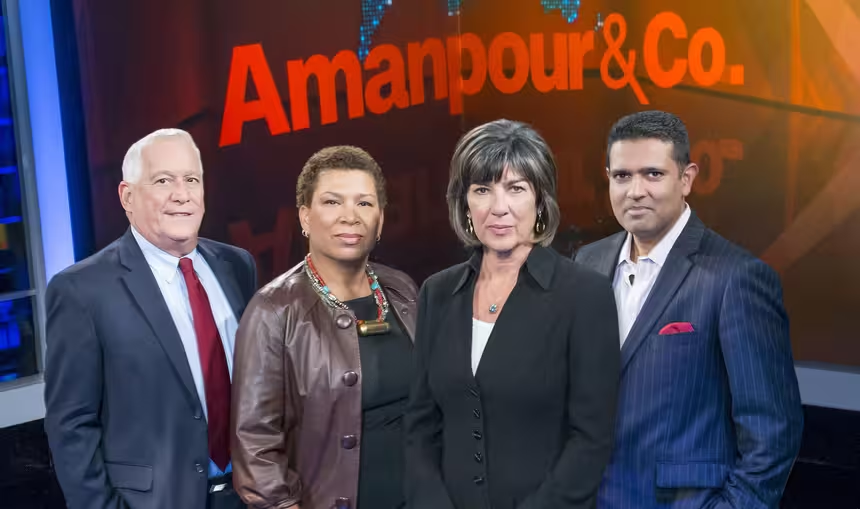
Watch Amanpour and Company on PBS
PBS and WNET, in collaboration with CNN, launched Amanpour and Company in September 2018. The series features wide-ranging, in-depth conversations with global thought leaders and cultural influencers on issues impacting the world each day, from politics, business, technology and arts, to science and sports.Providing Support for PBS.org
Learn Moreabout PBS online sponsorshipNow, the whole world knows about the blue wave that swept America in the midterms, and yet our next guest says gerrymandering still helped the Republicans.
Adam Sower, staff writer at The Atlantic, says redrawing congressional maps did limit Democratic gains and diluted black political power.
He tells Michel Martin historic turnout helped Democrats overcome those barriers this time, but he warns the process could be more effective in future elections.
Thanks, Christiane.
Adam Sower, thank you so much for joining us once again.
Thank you so much for having me.
So the Democrats in this midterm elections pulled off what got to be the most lopsided midterm election in a century.
They took back both houses of Congress.
They flipped seats of Republican strongholds.
They won races that few thought were competitive.
But still, you say in your latest piece in The Atlantic, gerrymandering worked.
Why do you say that?
Well, you can think of it sort of like a cup that holds water.
If you pour too much water in the cup, it's going to overflow, but that doesn't mean the cup doesn't work to hold water.
And that's basically what happened here.
Gerrymandering could not hold back the lopsided results of the election in certain places.
You know, but if you look at states like Texas, for example, or Florida, there were really lopsided results despite Democrats winning, or despite Democrats getting about half the vote.
So, in many places, the drawing of districts really did tamp down on gains that Democrats would have made.
The New York Times estimated that they would have won a bunch more seats had the lines been drawn neutrally.
And the truth is that it worked also for the Democrats.
California, you know, gerrymandered its districts in response to Texas doing so.
And they and Republicans got fewer seats than you might have expected, given their proportion of the vote.
And that's wrong.
You know, it's obviously, you know, the parties cannot unilaterally disarm when it comes to redistricting and gerrymandering because the effects are so strong.
But it would be a mistake to look at this election and say, see, gerrymandering didn't work because in the most lopsided election in 100 years, the district lines didn't manage to hold back, you know, 100 percent of the gains that Democrats made.
Some people would think, Adam, you're being such a buzzkill.
Like, why don't you just, you know, take the win?
You know, they they did the they did things that people thought were impossible.
I mean, winning a well, a statewide race is a different is a different animal.
Like winning that Senate race in Mississippi is not an issue of sort of gerrymandering or the seat in Alabama that Samari figures was was it was drawn to make him lose and he won anyway.
So why do you think it's important to point this out?
For one thing, by definition, you're not going to see results like this every time.
In a more normal election, these districts are the way that they're drawn are going to do, you know, what they were intended to do.
And part of how you know this is if you know, for example, in North Carolina, which is being described as a sort of textbook dummy manor in the sense that the drawing of districts the way that they did backfired, they don't want to redraw those districts again.
And they don't want to redraw those districts again, because they understand that this was a sort of unusual election, it was a wave election.
And so next time around, the election will probably be more normal and the gerrymanders will work as intended.
And I think in general, even if the gerrymanders had not worked at all, there is something really terrible about lawmakers trying to draw districts in such a way that it insolence insulates them from the feedback of their constituents.
I mean that is really an attempt to hack democracy because the only way that democracy works is if the people's representatives can get feedback from the people and when the people don't like that they've done something those lawmakers have to be concerned that they might lose their office because otherwise they can simply act without regard for what the people think and you know that is not the consent of the government.
Let's back up and talk about how did this start?
How did this whole this sort of mid cycle gerrymandering start?
Because everybody people hopefully they showed up for class in middle school that day we know they pointed out that the census is supposed to happen every 10 years it's under the Constitution it counts everybody in the United States for the purpose of you know apportioning these districts so it's supposed to happen once every 10 years.
This is clearly not once every 10 years.
So how did this whole thing start?
Well yeah I mean look we could go back to the beginning in the 19th century with the first gerrymander you know which is which is named after the congressman who drew the district.
This is something that has been part of American politics for a long time but it this was a particularly egregious example because you're supposed to redraw the districts after a number of years and Trump wanted Republican states to do mid-decade redistricting because they understood that there was going to be a big backlash to everything that they were doing and they wanted to make sure or try to make sure that they could keep their congressional majorities even if the American people did not want them to keep those majorities.
Let's go state by state because this is some of the things you point out in your piece.
You say that, for example, you're drawing on some of the New York Times reporting that in Texas, Democrats won more than half of the popular vote, but they netted 14 seats.
Republicans won 24, almost twice as many.
With a hypothetical party blind map, like one drawn by computer simulations, Democrats almost certainly would have won a majority of Texas House seats.
Let's go to Florida.
Based on what we know, this is, I'm quoting your piece now, "Thanks to mid-decade redistricting, only eight of Florida's 28 congressional districts will go to Democrats, despite Democrats winning about 48% of the vote, and in Tennessee, eight out of nine congressional districts will go to Republicans, with one close race still uncalled after Democrats won about 44% of the vote.
On the Democratic side, California's redrawing of the maps will leave Republicans with only four seats out of 52 after the GOP won about 30% of the vote.
So it's interesting that you're one of the few people who do write about this.
And I'm just curious why you why you think that is.
I don't know why that is.
But it's important to me, because my view of American democracy is that it is constantly been threatened by the desire to exclude certain people from the democratic process.
And historically, the people that they have tried to exclude are black people.
And, you know, this is no exception.
The Supreme Court gave a ruling that essentially said not only is partisan gerrymandering legal, but if you do racial gerrymander, racially discriminatory gerrymandering, and it's rooted in a partisan interest, then it's fine.
And that is an attitude that would have legalized a ton of Jim Crow era voting restrictions because after all, the Democrats really didn't want Republicans at the time to win elections with black votes.
So I think, you know, this issue is a really important one because it goes to the heart of do we as a polity, do the American people get to choose their leaders or not?
I think that's a really important basic question and a prerequisite for democratic governance.
And the other thing is that when lawmakers feel like they don't need to heed the will of the people, then they can act unscrupulously and, you know, profit from their office without having to worry that there will be any consequences for doing so.
The focus of your piece is you want to call attention to the fact that there are still consequences to this.
There was tremendous interest in this earlier in the election season.
But once the results came in, a lot of the sort of interest went away, although I am curious about why you think it didn't work, especially it didn't work in places that it was particularly intended to work.
I'm thinking about, you know, Texas didn't work in Alabama.
Why do you think it didn't work in those places?
- Well, I think that, you know, particularly in the South, the Democratic Party owes a lot of their victories to record turnout by black voters who were rightfully incensed by the Supreme Court, allowing parties to discriminate against black voters on the basis of race to try and diminish their political influence in the drawing of districts.
So I think that's one reason.
And I think another reason is a lot of people don't like when politicians are engaging in those kinds of shenanigans.
And when it's as obvious as it is here, I think there's a bigger backlash.
I think the other reason simply is that people who disapprove of the president were highly motivated to turn out.
And a lot of the president's supporters did not turn out because they aren't feeling very good about what he has delivered.
I mean, if you remember, Donald Trump ran on lowering inflation and not getting involved in foreign wars.
He said Kamala Harris would have us involved in World War III and I'm going to lower your grocery prices.
And he proceeded to start a war in Iran and engage in, which was an inflationary policy decision on top of his tariffs, which are also inflationary.
And then when the tariffs got refunded, the companies kept the money.
So you had a sort of extra special tax on consumers that went to some of the richest people in the country.
So I think there were a lot of Republican voters who stayed home because they were disappointed in the president, which in turn really made those Democratic votes count even more because there was less of an opposition.
And so again, this is a once in a century type thing.
So it's not gonna, it's probably not going to repeat itself again in two years.
And for that reason, we shouldn't look at the gerrymanders as a one cycle thing.
The question is how these gerrymanders perform in more normal elections.
It's very clear that the Republicans and Democrats who drew these lines to advantage their their parties believe that they will hold in future elections, even if they didn't hold it in a wave election.
Do you think that these results say something about black political power?
I think that historically black voters have been a very pro-democracy constituency in the United States and I think that is because historically, you know, we have had a color caste system in the United States that has placed black people at the bottom.
So black people have been very supportive, black women in particular, of universal rights as sort of exemplified by the words of the Declaration of Independence, not the founders actions, unfortunately.
And so as a result, you know, when, when black voters feel like their right to vote is being attacked, a right to vote that has been won with literal blood, you know, I think they respond very strongly to that.
And that's what we saw in this midterm.
And I think justifiably so.
You know, this the Supreme Court decisions, the redistricting, these all were really attacks on black political power, because Republicans do not want to try and get black voters to vote for them.
And they it's easier for them to try and disenfranchise them or diminish their political power.
And I think that backlash is rooted in that.
But it's also rooted in, I think, you know, a faith in the American system that black voters have to be able to change the system for the better.
That is remarkable considering how often that system has been rigged against black Americans historically.
I do wonder whether it says anything about white voters in the South and their more of an openness to vote for candidates that they perhaps had not been willing to consider previously.
There is some evidence.
I'm curious about that.
The predicate of this is that voting in the South particularly has been racially polarized.
Right.
I think that I would want to wait to draw conclusions.
I mean, obviously, since the Civil Rights Act, Democrats have not been able to win the white vote.
But you did see a larger proportion of the white vote, for example, going into Mississippi, a very racially polarized state, going to Scott Cologne.
So there is evidence that white voters have become more open to that.
Obviously, in Florida, a lot of white voters pulled the lever for a black Republican candidate because he won that race.
- Well, very closely identified with President Trump, it has to say.
- Yeah, so it's a bit of a different situation.
But what I will say is, I think we sort of have to wait.
I think the jury's still out on that one because we don't know whether that proportion of the white, greater proportion of the white vote going for black candidates for Democrats in these races in the South was a result of so many white voters staying home because they supported the president and they were disappointed with what he did.
It would I mean, I think, you know, obviously racial depolarization is desirable and sort of, you know, the long term.
But that's only if it comes as a result of, you know, civil equality, which is something that we have not achieved in the United States yet.
So where does this go from here?
I mean, you argue that Democrats owe black voters in particular a renewed commitment to protecting their voting rights.
And I think I might argue other voters as well who who have demonstrated that this is important to them.
What should that look like?
I mean, I think there should be legislation to restore the parts of the Voting Rights Act that the Roberts Court has eviscerated.
I think there should be legislation to ban gerrymandering.
And there are a number of ways to solve the gerrymandering problem.
You know, so obviously each one has advantages and drawbacks.
But I think those are the two things that Democrats should focus on, you know, as a way of doing right, both by their constituents, but also, you know, everybody in the country.
The truth is, is that this kind of attempt to disenfranchise people harms democracy.
So it really affects everybody.
And I understand that sometimes people, you know, the thing that they, they're so angry at the other party that they just want revenge or they want to get back at the other party.
But this is a race to the bottom in which everybody loses.
And so, you know, I think the problem is that I do not see any signs from Republicans that they're, you know, that they've learned their lesson and they're willing to come to the table on this.
So any legislation might have to wait for, you know, when Democrats have both majorities in both chambers and a Democratic president in the White House.
But I do not think I think the most important thing is not to get complacent because, you know, gerrymandering wasn't as effective as Republicans wanted it to be in an election that was, after all, a once-in-a-hundred-year event.
Before we let you go, you have argued that America faces a longstanding crisis of elite accountability, and yet you're saying that that frustration with powerful people escaping consequences is part of what fueled Trump's rise to begin with.
So now that this election has taken place, that this opportunity exists, but how would you kind of position the Democrats going forward?
How would you tell them to talk about this?
There are people who are trying to argue that the Democrats should focus on affordability and not really do aggressive oversight of the Trump administration.
And I think that's a mistake, because if you remember in 2016, Trump ran on quote unquote, draining the swamp.
He was feeding off this sense of elite impunity.
And of course, everybody understood at the time that he was an example of that impunity, and he was going to take advantage of it.
And indeed he has supercharged elite impunity.
I mean, even what you've seen recently with this Nvidia scandal and his role in restoring the CEO who had been ousted.
There is a sense that there is one law for billionaires and politicians and connected people and a completely different set of laws for the rest of us.
And until, you know, political parties start forcing consequences on people who seem to be above the law, their lawbreaking is going to get worse, harsh consequences for everyone else, and no consequences for us.
And I think voters in both parties are actually really angry about that.
I think Donald Trump took advantage of that anger from the right in order to get elected both times.
And I think if Democrats, you know, want to discharge their responsibilities, you know, as a co-equal branch of government, they should be extremely aggressive in making sure that they look into potential law breaking by this administration and make sure that those who broke the law are held accountable.
And you know, to people who would call that revenge, that's not revenge.
That is upholding the law.
That is the role that Congress has as a co-equal branch of government.
- Adam Sarwar, thanks so much for talking with us.
- Thank you so much for having me.
 New Episode
- News and Public Affairs

Top journalists deliver compelling original analysis of the hour's headlines.
 New Episode
- News and Public Affairs

Today's top journalists discuss Washington's current political events and public affairs.
 New Episode
 New Episode
 New Episode
 New Episode
 New Episode



 New Episode

 New Episode

Support for PBS provided by: