
The Black Church in Detroit series examines voting in the midterm elections, a “Faith in Detroit” story
Season 54 Episode 43 | 26m 46sVideo has Closed Captions
The importance of getting out the African American vote and more from “Faith in Detroit.”
As election day approaches, our "Black Church in Detroit" series examines the role of the church in supporting voter education, participation and protection. Plus, we'll learn about a choir director's faith journey in another installment of our "Faith in Detroit" series.
Problems playing video? | Closed Captioning Feedback
Problems playing video? | Closed Captioning Feedback
American Black Journal is a local public television program presented by Detroit PBS
The Black Church in Detroit series examines voting in the midterm elections, a “Faith in Detroit” story
Season 54 Episode 43 | 26m 46sVideo has Closed Captions
As election day approaches, our "Black Church in Detroit" series examines the role of the church in supporting voter education, participation and protection. Plus, we'll learn about a choir director's faith journey in another installment of our "Faith in Detroit" series.
Problems playing video? | Closed Captioning Feedback
Where to Watch American Black Journal
American Black Journal is available to stream on pbs.org and the PBS app.
Providing Support for PBS.org
Learn Moreabout PBS online sponsorship- Just ahead on American Black Journal, our Black Church in Detroit series examines the church's role in mobilizing and educating voters ahead of the midterm elections.
(mellow music) We'll talk about the importance of getting out the African American vote.
Plus we'll hear a personal story of faith that grew out of a family tragedy.
You don't want to miss today's show.
American Black Journal starts right now.
- [Masco Voice] Across our MASCO family of companies, (mellow music) our goal is to deliver better living possibilities and make positive changes in the neighborhoods where we live, work, and do business.
MASCO, a Michigan company since 1929.
- [Voice Over] Support also provided by the Cynthia and Edsel Ford Fund for Journalism at Detroit PBS.
(mellow music) - [DTE Voice] The DTE Foundation is a proud sponsor of Detroit PBS.
Through our giving, we are committed to meeting the needs of the communities we serve statewide to help ensure a bright and thriving future for all.
Learn more at dtefoundation.com.
- [Voice Over] Also brought to you by Nissan Foundation and viewers like you.
Thank you.
(upbeat music) - Welcome to American Black Journal.
I'm your host, Stephen Henderson.
Today we're continuing our Black Church in Detroit series, which is produced in partnership with the Ecumenical Theological Seminary and the Charles H. Wright Museum of African American History.
We're just days away now from the November Third midterm elections.
And historically, Black churches have played a really crucial role in voter education, participation, and of course, protection.
There's a lot at stake in these elections and it's important that every voice is heard.
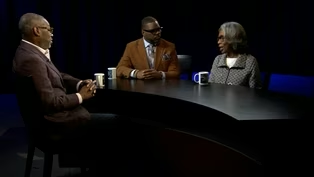
Here to talk about voter outreach are Reverend Dr.
Charles Williams The Second.
He's the pastor at the historic King Solomon Baptist Church and chair of the Michigan chapter of the National Action Network, along with Reverend Stancy Adams, Associate Minister at Historic New Mount Zion Baptist Church and chair of the Interfaith Leadership Council of Metropolitan Detroit.
Welcome both of you to American Black Journal.
- Thanks for having me.
- Yeah.
- Thank you.
- Yeah.
So like I said, we're just days away from this election.
I'm somebody who's a little nervous about turnout, right?
We can talk about outcomes, but really, the marker that I always judge elections by is how many people participate.
And we don't have the best record in Detroit or in Michigan, really, of getting people to the polls.
Let's start with the role that your churches are playing this cycle in trying to make sure that your congregants participate in the election.
- Well, first of all, let me tell you, I think it's perfectly fine for you to be a little bit nervous.
In fact, I want people to be nervous because the more nervous folks are, the more push we can get folks to get out and vote on.
The last time I wasn't nervous, I woke up and the president was the president.
(laughing) Let's just put it that way.
- You weren't nervous about that election and it turned out a different way.
- And it turned out a different way and it happened both times that he became president.
So I think that's a challenge and we have to make sure that we educate folks.
And I think making sure that people understand the bread and butter issues and how they attach to your vote makes all the difference.
Our congregations and my congregation specifically, we're ramping up.
We got folks going, give folks ride to the polls.
We got folks making phone calls to family members and such.
But for by and large, our congregations are enthused and they've already voted in many cases and are going to vote.
And that's based off of not just my common knowledge, but Dr.
Ron Brown (indistinct) university from the political science department along with his son, Dr.
Kari Brown, who's in the sociology department at Wayne State University, does research on Black churches and politics.
And it's very clear that congregations vote and overwhelming.
So we're good to go that way but what we're concerned is, can we get little Johnny who don't go to church, who live in a basement?
Johnny, I know you get up and go to work every day, but I need you to make sure you get out and vote.
Making sure that we get folks in our community and making sure we get our new voters 18 and up out to vote.
And we got some hope and we got some change I think that's on the ballot that could help push that over the hill.
- I want to have you talk a little about the church that you work in.
I'm not sure we've had anyone from your church on the show before, so we want to hear a little bit about what's going on over there.
- Well, ever since before the primary, we have been hosting meetings or learning seminars after worship every Sunday.
The only exception was primary week and then they started back again.
And we're educating people.
We're inviting people from the outside because we're strategically located right there at the corner of 14th and Elmhurst where there's a lot of homelessness.
And so it's trying to reach those people outside of the church.
We held a backyard, if you will, soul food picnic and went door to door inviting people to come in.
So we're pushing.
We're pushing to try to get people and talking to the congregants so that they will talk to their family and friends because that's what it takes, relationship.
You can't just meet a person on the street.
I mean, you can, but can't just meet a person on the street and convince them that they ought to vote.
But those people that you have relationship with that you know are not voting, those are the people that you can get to the polls.
And if each one of us would reach one... - Right, the numbers would go way up.
- Way up.
- Yeah.
- One of the things I want to just say on top of that, not only is it important to educate folk to vote, but one of the things that I think has become an overwhelming message from the church is to go to the polls and vote.
There's a lot of voter intimidation going on and we're working intently to pull together as much voter protection and election protection as we possibly can.
But when you have an executive office leader, be it in the office of president, that's basically saying ballots, absentee ballots are fake or there's a challenge-- - Challenging the ability to even cast those.
- That's right.
I think it's very important for, especially even people now.
I mean, if you haven't, just go to the polls-- - Go to the polls.
- -and take your ID and vote.
- Yeah.
- We have early voting.
- I was going to say, here in Michigan, you don't have to wait till election day, you can just go and cast your ballot whenever you're ready.
- Before you go to work, after you leave work.
- That's right.
- You mentioned voter intimidation and the things that are being said about votes and voters in places like Detroit.
I wonder where you are seeing that, where your congregants are seeing that.
I mean, we have a Senate candidate on the Republican side who says he thinks that there ought to be more security in Detroit around polls to make sure that there's not cheating or whatever.
It's one thing to sit on the outside and talk about that.
I think you two have more of an inside view of how that looks.
- Over the years, I've had the opportunity to participate in election protection since 2000, 2004 in those elections.
I know we all remember 2000 with hanging chads and then 2004, we saw a purposed intimidation campaign from individuals who would come from outside of the state into the city of Detroit and quite honestly disrupt the election while they were trying to intimidate the poll worker or while they were trying to intimidate the process.
And then of course, two years ago we saw when Joe Biden was elected here in Detroit, another mass group of people who were standing on the outside of the, at that time, Cobo Hall, now Huntington Center, beating on the doors and trying to disrupt the elections.
These are the types-- - This is in 2020?
- This is in 2020.
These are the types of... Really, it was the precursor, if we think about it, to January Sixth, 2020.
- That's right.
- Of that year.
- Wow, it was like the warmup rally.
I hadn't even thought about it like that.
But I mean, we literally saw this with our own eyes and we wholeheartedly expect that now because of the administration and its direction that it's going in now, you never know.
We could possibly see in Southwest Detroit law enforcement at polling sites trying to intimidate individuals.
What we do have is a partnership across the country, the NAACP along with National Action Network, along with the Voters League, as well as the NAACP Legal Defense Fund.
We have lawyers coordinated across the country.
1-866-OUR-VOTE, 1-866-OUR-VOTE, if you are experiencing that type of intimidation.
So we have an apparatus in place that can quickly respond to all of those scenarios across the city of Detroit.
And we've at National Action Network organized voter brigades from across the country where we have teams of people who are ready to get to a poll where there may be some type of intimidation.
And so while there will be some barriers and some challenges, I do think that because of the power that we have in the Black church and the energy that we have spent organizing, NAACP comes out the Black church.
Everybody knows it comes out of Fellowship Chapel and NAND and the interfaith group and all of these are certainly important apparatuses that help us beat back these types of attacks and we stand ready from Atlanta to Detroit.
- Yeah.
Where are you seeing this narrative play out about questioning the vote?
- I've not seen a lot of it.
I'm concerned about the seniors and those people that are in the Hispanic communities particularly.
And as I listen to-- - Because of the immigration enforcement.
- Because of the immigration enforcement.
And as I listen to Dr.
Williams speak, I'm more concerned about the image that it portrays to the people as they go in because they don't know one from the other.
They don't know the security from the intimidators until they open their mouths.
- I see.
- So how are they going to perceive that?
And I just encourage people, if you can't go out or if you're intimidated to go to the polls, vote absentee.
- Right, that's the other choice you have.
- That's the other choice you have.
- Yeah.
- And I understand that there's some concerns about absentee ballots, but I would rather them do that than to be intimidated at the polls and not vote.
- Well, I mean, that was one of-- - Because if they go there-- - Yeah, go ahead.
- No, if they go there to vote, we want them to be able to vote.
- You want them to actually cast their ballots.
- To actually cast their ballot and not turn around because of fear.
- Yeah.
Well, I mean, that was one of the things when we amended the Constitution and changed some other laws in 2018 to expand the franchise, we gave people lots of choices.
- Options.
- Absentee, early voting, day of election voting.
I mean, there are lots of different ways to make sure you're counted that we didn't used to have before.
- We came back down.
I mean, the challenges that we have in 2026 are not unlike the challenges that we've seen before.
We know.
I used to hear Reverend Jackson talk about the story of how Rosa Parks, who registered to vote and fought to register to vote before she sat down on the bus.
Of course, there are those who had to face dogs, there are those who had to face water hoses, and there were those who tried to walk across the bridge to push the importance of voting from Selma to Montgomery.
And there were challenges then, and those challenges led to bloodshed.
Now we have the same challenges.
They come in different ways, but we were resilient then, we'll be resilient now and we'll get out there and do everything we can to make sure we get the vote out.
- Yeah.
I know you wanted to talk a little about proposal one, which appears on our ballots every 16 years here in the state of Michigan and gives us an opportunity to have a constitutional convention.
You think that's a really important... Now we can't talk about what you think people should do.
We can't tell people how to vote, but you think it's really important to vote on that issue.
- I think it's important that people understand what it will do.
And then they will make the better choice.
(laughing) And that is, it will deconstruct the Michigan Constitution.
(laughing) - Okay, so that's an interesting way to put it.
That's not what the language says, but I'll let you go with that.
- If you vote yes on it, what it's allowing to be done is taking the Constitution of Michigan and find 148 people that are not elected officials that are appointed by those that have special interests primarily because they have the loudest voice.
And they will go into a convention, 148 of them, and change the Constitution to meet the concerns and needs of billionaires.
(laughing) - Okay.
Well, that's your interpretation of it.
I have a slightly different one.
- All right.
- Number one, I think if you look back at 1963, which is the last time we did this-- - That's right.
- -you think of all the really important things that came out of that effort then, I think we should be in a position of maybe trusting each other a little more than we do right now and thinking that the process when everyone is around the table could go better.
The other thing is the people get a vote on whatever they come up with.
And if we don't like it, we just say, "No, we're not going to do that.
We're going to keep the constitution that we have."
So I'm certainly not saying that you won't have special interests who are all over that process, but we have a lot of things in Michigan that we should sit around and talk about that could be different in the constitution.
And when we do it by ballot initiative, it gives us one choice or another.
It doesn't give us that ability to come up with the third way, which is how those things all kind of come together.
- And I agree with that, except the 148 people will come together without any input from the rest of the state on what they like.
- On what they like.
- And then once that document is completed and people get the opportunity to vote on it, they're not going to read it.
- Well, again, we got to have a little more faith in each other.
- I have faith in people, (laughing) but I also know that if you give them pages and pages of-- - It's hard to... Yeah.
- It's hard.
- We would have to do a lot of voter education.
- Absolutely.
- What if you wanted the 148?
- Yeah, right.
What if you get to be a delegate?
(laughing) If you think about the people who were delegates to that constitutional convention in 1963 too, all kinds of people who went on to do really important things, including the person who wrote the Elliot Larson Civil Rights Act here in Michigan, she was a delegate to that-- - And I agree.
I think that there are some good people.
And I think that under another administration, that it might not have been a bad thing for us to reexamine the Michigan Constitution.
- Yeah, but you're not a fan, I can tell.
- Right now, I think that there are too many things that are in question for us to spend something around 80 million dollars-- - [Stephen] Doing that.
- Doing that when we have so many other things that need to be fixed.
- We've got a minute, I want to give you a chance to talk about something you want people to really focus on on the ballot.
- I think it's important.
Well, in terms of the ballot, I do think that it's important to make sure you look at the Constitution.
I think transportation is always important in Detroit.
And then of course, protecting our history and museums is always important.
I mean, flip the back of the ballot, right?
- Right, do the whole thing.
- If you hit the top and you say, "I'm gone," you do yourself a disservice because your resources that come out of your tax dollars are on the other side of that ballot.
- Yeah.
- That's right.
- And I want to encourage everyone in Detroit to take a look at that school board ballot.
That is a critical election.
There are a lot of candidates.
- Absolutely.
- You should read up on who they are and then cast a vote.
- I cannot urge that enough to do some research on the people.
Don't just vote for the person that you know.
- Right.
Read up a lot.
- Read up on them.
- Okay guys, great work protecting and protecting participation in our elections, and thanks for being here on American Black Journal.
- Thank you for having me.
- Thank you.
- Yeah.
Now we've got another installment from the Faith in Detroit Project that's led by Christ Church Cranbrook.
Detroit PBS is one of several partners in the initiative that share stories of faith and resilience.
Today we hear from Rosetta Golden, a member of Fellowship Chapel.
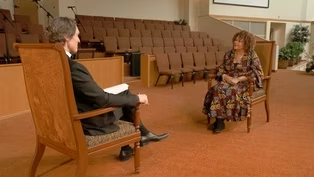
She sat down with Faith and Detroit Director, Father William Danaher to talk about her faith journey, which began when she was a young child.
(mellow music) - We are so grateful to have with us Rosetta Golden, who is the choir director and also the accompanist at this beautiful church, Fellowship Chapel.
We are so grateful to have you here and I am so grateful that you're here to tell your story of faith.
- My grandmother was a woman of faith and she introduced me to Jesus and all that.
So when I was five years old, both my parents died.
My father, he was a Korean War veteran and his sister lived here and she sent for him.
And she always was so heartbroken that she sent for him because my father drowned in the Detroit River, but it was ruled a suicide.
So that just hurt his sister so much because she brought him here in Detroit.
And then my mother, they weren't married, but my mother, not too long afterward, she died and my mother, that was ruled a suicide.
So it was like a pretty tragic beginning.
But my grandmother was always there.
Even before my mother died, my grandmother was in my life.
She loved me so much and I just loved her.
And she was the one that really introduced me to faith.
I remember as a child, she taught me my first Easter speech and she told me this was her Easter speech.
And I still remember, I taught it to my children.
I think I'm going to teach my grandchildren, but it goes like this.
There is a green hill far away without the city wall where our dear Lord was crucified.
He died to save us all.
We may not know, we cannot tell the pain he had to bear, but we believe it was for us he hung and suffered there.
He died that we might be forgiven.
He died to make us good.
He died that at last week go to heaven saved by his precious blood.
There was no other good enough to pay the price for sin.
Only Jesus could unlock the gates of heaven and let us in.
And then afterwards she said, "You got to say it, you got to bow after you clap for your Easter speech."
Years later, I was looking in the hymn book and found out that that's actually a hymn.
I found out that was a hymn.
But my grandmother, she took care of me.
When my mother died, her sister came from South Carolina to the funeral and she took me back to South Carolina.
And it was something my pastor is always preaching about, those 10 tubs that you take a bath in for our kids, the girls at least would get to bathe first.
They actually had a pump in the yard.
We didn't have indoor plumbing.
So when I told them about Detroit, they thought I was rich or something because this was amazing.
But my grandmother came, we ended up back in Detroit.
Even my aunt, all of them came and I lived with my aunt, her husband, five children, and the grandmother in a little community called Delray, I think, outside of the city.
And we stayed there.
And I remember they had a hi-fi.
Is that what you call it?
A hi-fi stereo?
And we would be listening to Motown and everything, dancing and everything.
There was a TV.
I remember Halloween going trick or treating and getting just pillowcases of candy and all that.
So one day my grandmother came and she said she had a good friend, and this friend knew a couple that were ministers.
They didn't have any children.
And she said, "There's someone we want you to meet."
So I met this couple and they took me to their house on the way.
They took us out to eat, bought me something.
We could drive up to Boston Boulevard, this big house and everything.
And I was like, "Oh, this is amazing."
I come back to my cousins, tell them what happens, and they're all excited.
They want to know.
And so they get to go several times and eventually they want to adopt me.
And so as a child, it's like, yeah, because it looks exciting.
And of course you've had the best of best, the shopping and the food and all that.
And so this couple, they did adopt me, a minister, a Baptist minister and his wife.
And I went to live with them and it was good.
But I missed my cousins and everything so much.
No children and very quiet, a whole different situation.
I remember in the car one day, the windows are down and somebody's playing My Girl or something.
I don't know what the song was.
And I was singing and all.
They was like, "Oh, no, no, no, no, no.
That's the devil's music."
I'm like, "Oh, okay."
So we don't do that.
We don't dance.
We went home and my mother, my new mother, she started looking through all my clothes and she separated all the pants and all that and the shorts and that.
And we wear dresses like, okay, we wear dresses, we don't dance.
And just so many brand new... It's like, wow, even though you're just eight years old, this is a culture shock.
Like okay.
So it was just different.
And they had no TV, no television.
No television.
So I did discover reading.
I love to read.
And we had the World Book Encyclopedias and just a lot of books and all that.
So I read because we had no TV.
One day I came home and there was a television.
I'm like, oh my God, the devil box is in the house.
I would go to school and the children would say, did you see this and that?
I'm like, yes, I would lie because I didn't want them to know that we didn't have a television.
So it was just different.
And so they were wonderful people.
That's where I got my music experience because in the house was a big, beautiful white grand piano.
And I ran over there and was hitting and playing.
And so they said, you're going to take piano lessons.
I took piano lessons and I had to practice an hour every day.
And if you missed one hour, the next day you had to practice two hours.
So I tried to practice the piano, but I loved the piano.
They were very devout.
So every morning we had devotion.
So everyone in the house had to get up, come down, read the Bible and pray.
And so my mother... And after that, when you got older, you had to have personal devotion.
So you were sitting around, did you have your devotion?
Like yes.
And what was it about?
Jesus.
You couldn't get away with that because she knew the word so much.
You had to say, I read in Romans or something.
You had to explain what was going on.
But I appreciate that now.
- That's going to do it for us this week.
(upbeat music) You can find out more about our guests at americanblackjournal.org and you can connect with us anytime on social media.
Take care and we'll see you next time.
- [Voice Over] This program is made possible in part by Lilly Endowment and Christ Church Cranbrook.
- [Masco Voice] Across our MASCO family of companies, (mellow music) our goal is to deliver better living possibilities and make positive changes in the neighborhoods where we live, work, and do business.
MASCO, a Michigan company since 1929.
- [Voice Over] Support also provided by the Cynthia and Edsel Ford Fund for Journalism at Detroit PBS.
(upbeat music) - [DTE Voice] The DTE Foundation is a proud sponsor of Detroit PBS.
Through our giving, we are committed to meeting the needs of the communities we serve statewide to help ensure a bright and thriving future for all.
Learn more at dtefoundation.com.
- [Voice Over] Also brought to you by Nissan Foundation and viewers like you.
Thank you.
(mellow music)
 New
Clip: S54 Ep43 | 17m 3s | How the church is promoting voter education and participation ahead of the midterm elections. (17m 3s)
 New
“Faith in Detroit” features Rosetta Golden’s story of resilience
Clip: S54 Ep43 | 7m 10s | Rosetta Golden talks with “Faith in Detroit” director Fr. William Danaher about her faith journey. (7m 10s)
Providing Support for PBS.org
Learn Moreabout PBS online sponsorship New Episode
- News and Public Affairs

Top journalists deliver compelling original analysis of the hour's headlines.

- News and Public Affairs

FRONTLINE is investigative journalism that questions, explains and changes our world.

 New Episode
 New Episode
 New Episode
 New Episode

 New Episode


 New Episode


Support for PBS provided by:
American Black Journal is a local public television program presented by Detroit PBS