
The decline of bird populations and why humans should care
7/30/2026 | 26m 46sVideo has Closed Captions
The alarming decline of bird populations and why humans should care
Birds are not only wondrous creatures that live amongst us, they’re also an essential part of life on Earth – helping grow food, keeping pests at bay and spreading seeds. But more than half of migratory bird populations are declining globally. Horizons moderator William Brangham explores the threats birds are facing with ornithologist Peter Marra of the Earth Commons at Georgetown University.
Problems playing video? | Closed Captioning Feedback
Problems playing video? | Closed Captioning Feedback
The decline of bird populations and why humans should care
7/30/2026 | 26m 46sVideo has Closed Captions
Birds are not only wondrous creatures that live amongst us, they’re also an essential part of life on Earth – helping grow food, keeping pests at bay and spreading seeds. But more than half of migratory bird populations are declining globally. Horizons moderator William Brangham explores the threats birds are facing with ornithologist Peter Marra of the Earth Commons at Georgetown University.
Problems playing video? | Closed Captioning Feedback
Where to Watch Horizons from PBS News
Horizons from PBS News is available to stream on pbs.org and the PBS app.
Providing Support for PBS.org
Learn Moreabout PBS online sponsorshipI'm William Brangham and this is "Horizons."
Birds are not only wondrous creatures that live amongst us, they are an essential part of life on Earth, helping grow food, keeping pests at bay and spreading seeds far and wide.
But there's a threat to that chirping you hear in the woods or outside your window.
More than half of migratory bird populations are declining globally.
What these canaries in the coal mine tell us about their future and ours and what we can do to protect them, coming up next.
♪ Narrator: Support for "Horizons" has been provided by Steve and Marilyn Kerman and the Gordon and Betty Moore Foundation.
Additional support is provided by Friends of the News Hour.
♪ This program was made possible by contributions to your PBS station from viewers like you.
Thank you.
From the David M. Rubenstein Studio at WETA in Washington, here is William Brangham.
Welcome to "Horizons."
Birds are in serious trouble.
A new study out last week in Nature indicates that more than half of all migratory bird species globally are declining.
That includes some, like these ruddy turnstones and red knots, who make tremendous journeys across multiple continents over the course of their lives.
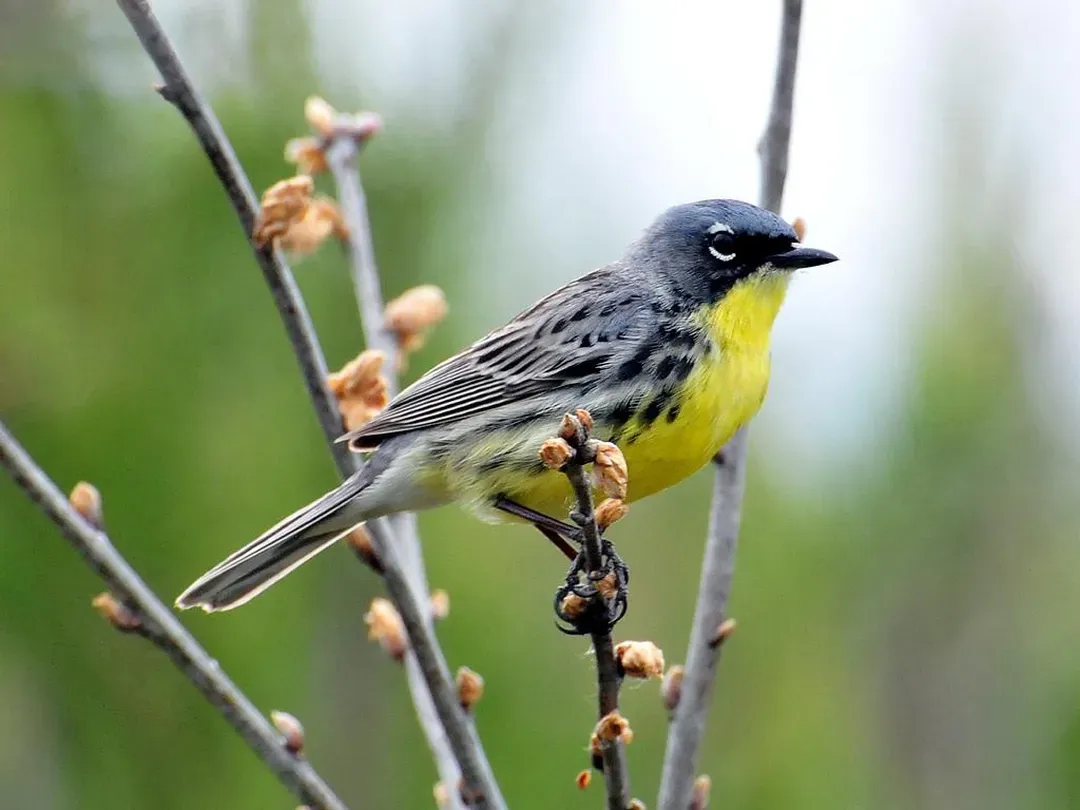
Others include the orange-bellied parrot, which flies across Southern Australia and Tasmania, or the sociable lapwing, which traverses Russia to the Arabian Peninsula, or the Kirtland's warbler, which starts in Canada and the American Midwest and travels all the way down to the Caribbean.
All these birds, and many, many more, are threatened.
In addition to everything that they do in our ecosystems, from pollinating plants to controlling pests, the plight of birds signals that something on Earth is badly off-kilter.
The authors of this study write, quote, "Without intervention, "continued declines and extinctions are inevitable."
The lead author of that study joins us now.
Ornithologist Peter Marra is the dean of the Earth Commons, which is Georgetown University's Institute for Environment and Sustainability.
He also teaches conservation biology there.
Marra is also co-author of a landmark 2019 study documenting the loss since 1970 of three billion birds in North America.
Peter, thank you so much for being here.
Really an honor to have you.
Before we get into your current study and your past studies, can you just remind us a little bit?
You heard me, what I mentioned, about why we care about birds.
Talk a little bit more about that, about why they are so important to us.
Sure, sure.
So, birds provide enormous ecosystem services that sort of maintain the integrity of nature.
And we are part of nature.
And this is one of the things that most people just keep forgetting about, that humans are actually a critical component of nature, but we're dependent on nature.
Our food comes from nature, the buildings we live in come from nature, everything comes from nature.
And so, as we destroy nature, as we see populations decline or climate change starts to impact us in negative ways and nature itself, it starts to undermine the integrity of this ecosystem.
Birds are a critical part of that ecosystem.
They provide seed dispersal, pollination, enormous numbers of these sorts of things.
But beyond that, I like to think of birds as sort of flying pieces of artwork.
We've done amazing things to create these remarkable museums to protect the cultural heritage we have as humans.
We have museums that are filled with Monet's and Rembrandt's and Homer's and name your favorite artist.
When I go outside and I look at birds and I see a species like an American redstart or a ruddy turnstone or a red knot that was mentioned earlier, I think of those as living paintings.
And I often think that, well, we need to protect these living pieces, these masterpieces, just like we protect masterpieces in museums, which I also support.
But these living pieces of art are just like that, and they're free, and you can go out and see them anytime.
Do you think that we have a hard time seeing them as so integral?
Because yes, they are just extraordinarily gorgeous and unique, but they are alien to us.
I mean, I saw a heron go by a few weeks ago, and someone I was with said, "That felt like watching a dinosaur go by," that it was almost a prehistoric.
Do you think that somehow their otherness makes it hard for people to see the connection you're talking about?
To some degree, that's true.
I think the bigger problem is that we've lost our connection to nature.
Most people live in cities now, and we don't get outdoors.
We don't hike.
Some of us do, but we're doing less and less of that.
And I think the more we do less and less of that, the less that we're going to value it.
And if we don't value it, why would we protect it?
So one of my big goals is to sort of create a stronger connection between humans and nature.
And birds, ironically, are the easiest way to do that.
And you walk out your door, just like you described that great blue heron, you walk out your door and you see an American robin, or you see an American goldfinch.
Birds are extremely accessible, whether you live in cities or you live in a really rural area.
It's our job to make sure, as scientists, as conservationists, to make sure that people that don't have access to these things always have access to them, and that they understand the value of protecting nature, just like the value of protecting our cultural heritage or humans as a species in themselves.
Right.
So let's talk about your paper just out in "Nature," documenting this precipitous decline in migratory birds.
Just tell us a little bit more about your findings.
Sure.
So, you know, in 2019, I published another paper where we found that over 3 billion birds, about a third of our species, we'd lost them.
Brangham: This was in North America.
This was in North... that was in North America.
This paper was a global analysis, looking at birds across the entire Earth, from the Arctic to Africa to India to South America, the entire population of migratory birds, using the best data possible.
And one of the things I should say is, for many of these species, we just don't have really good data on what's happening with their numbers.
Are they declining?
Are they increasing?
Are they stable?
Is that because they're just traveling across so many nations and borders and lands that you just, it's hard to keep eyes on them?
Marra: Absolutely.
That's part of the issue.
But the other issue is that in many places around the world, we don't monitor them.
We just don't have the resources and no one's monitoring them.
A lot of the monitoring that comes from our... that came from our 2019 paper, were from data collected by citizen scientists, birders.
So in the United States and Canada, we have more money.
People have more opportunities to go out birding.
And we've actually done a great job of turning that birding hobby into a data collection process.
Is that right?
People... Those folks you see out on the edge of a marshland with their binoculars, are citizen scientists in a way?
They are absolutely citizen scientists.
And the Cornell Lab of Ornithology, 25 years ago roughly, created a way for people to enter their birding hobby online.
And so if they saw four goldfinches, they put in four goldfinches.
Or if they saw three American robins, they put in three American robins.
To the point now where, you know, 25 years later, we've got millions and millions of data points where we've been able to analyze those trends and actually show that some things are good, some things are bad.
Unfortunately, more things are bad.
So we decided to expand out, regardless of, you know, the fact that we didn't have really good data like from citizen scientists in other places around the world.
Many other conservation biologists and ornithologists were still keeping track of trends in the best way they could.
And we assembled all those people and started to really look at what's going on with these birds.
These are migratory birds.
These are birds that breed in one location and then, after they breed for about two or three months, they move to a different part of the planet and they spend the majority of the year in their non-breeding area.
So they're moving all over the place.
And this is not just on land.
Sometimes it's on the ocean.
And so it's a very complex system of really fascinating species.
Brangham: And hard to keep eyes on.
Very hard to keep eyes on.
And so that said, we've got more and more techniques and more and more approaches that allow us to do a better and better job at that.
But this paper was about really pulling together the best available information we had to understand how are we doing, how are they doing?
And the answer was not good.
It was sobering, in fact.
That over half of the species that are migratory are actually in decline.
Brangham: And why?
Marra: Lots of reasons.
I mean, the number one reason is probably habitat loss.
And we've lost enormous amounts of our habitats to development, to farmland, to urban areas, to housing, to all sorts of things.
When you fly over the United States and you leave in D.C., if you go up in an airplane and you start to fly, you start to realize we've really changed the landscape in ways that has to have impacts on all sorts of biodiversity, not just birds.
When you fly around the planet, you go to Europe, same thing.
When you remove those habitats that birds have evolved in and become specialized in, there's no place for them to breed, there's no place for them to live, and they die.
They disappear and you start to see declines.
But that's only part of the story.
The other part of the story is that we have lots of other threats that are causing mortality of birds.
Things like cats, outdoor cats, tend to kill... Brangham: You mean domesticated pets?
Marra: Domesticated cats that are outside.
It's a tremendous problem.
One point four to four billion birds a year, just in the United States alone, are killed because of outdoor cats.
And this is a global, global problem.
Buildings.
When we see these big, tall, glass skyscrapers, birds collide with those.
The lights are on at night.
Many of these species migrate at night.
They see the lights from these buildings and they collide.
In fact, there's people in lots of cities that walk around buildings the mornings during migrations, and they actually collect up these birds to try to resuscitate them or to just quantify and count the number that are killed.
And in the U.S., it's somewhere around a billion birds a year that die just because of collisions with buildings.
Because lights are on, and the birds see that they're lured to that in some way, and then they strike the building and that's it.
That's right.
They have hollow bones, because... many birds have hollow bones because they have to fly, so they have to reduce their overall weight.
So when they collide in something, their structures are not made to support that sort of impact.
And so they die.
They hemorrhage.
It's just not easy for them to respond to that.
Okay.
Wow.
So that's a lot of impacts.
The issue that a lot of our audience thinks about, too, when we talk about environmental degradation and habitat loss is climate change also.
Does that play a role in this?
Marra: Absolutely.
We don't really have a good handle on population impacts of climate change.
And so when you think about climate change, it's everything from, it's not just warming.
If you're in the tropics, it's temperature.
And we're seeing changes in temperature and precipitation and rainfall.
So we're seeing like in the greater Antilles, the Caribbean, we're seeing a long-term significant drought that has subtle but really profound effects on how well birds survive, how well they can migrate, where they migrate.
And so we're quantifying these sorts of things.
There's also sea level rise.
And so the areas along coastal areas that many shorebirds- Brangham: Which are vital for shorebirds.
Marra: Vital for shorebirds or for nesting.
Sea level rise is having all sorts of subtle but really profound impacts that we can measure over a few years.
But the impacts of climate change happen over 10, 15 years.
And so we're really starting to get a handle on how those impacts will happen in the future.
And so how they're impacting populations is the next stage in our understanding of how climate change is impacting birds.
You said that there is some good news in this.
What is that?
Because honestly, reading this paper, reading your previous work, it is hard not to see this as a... the graphs are crystal clear and it feels like a calamity.
They are crystal clear.
But when you're in my business, you have to have hope.
So I try to focus on what we can do and what we can correct.
And I also view myself as sort of being a spokesperson for future generations.
And I really would like them to have hope too.
We have to have, they have to have hope.
And so the good news is we've been down this road multiple times in the past.
In the early 1900s, when we were hunting egrets and herons for their filoplumes on ladies' hats.
We almost caused the extinctions of things like great egrets and snowy egrets, but Teddy Roosevelt came along and put this law into place where there was no more hunting.
And it turns out nature is extremely resilient.
And when given the chance, it comes back.
Brangham: You take the threat or the peril to their habitat or whatever, they're resilient.
Marra: They're resilient.
They'll rebound and reproduce.
One of my heroes is Rachel Carson, who wrote a really famous book, "Silent Spring."
It's one of my favorite books.
I really recommend reading "Silent Spring."
And it's just a wonderful success story for environmental issues.
There was a chemical called DDT that was being sprayed in the 40s and 50s, and it was causing all sorts of problems with birds.
And then we started to see declines in species like the osprey, the brown pelican, even the bald eagle and the peregrine falcon.
These all almost went extinct.
Our national bird, the bald eagle, almost went extinct.
But Rachel Carson, you know, wrote this book, "Silent Spring," became popular, began to really promote this issue, and eventually got it banned.
And from that, not only was that banned, but the EPA was formed.
All sorts of organizations, the Endangered Species Act was created.
And all those species have come back.
No species went extinct due to DDT.
It's a remarkable story.
And the fact is that when we remove those threats, these species will rebound.
Brangham: I know you have written a lot about this.
And part of this is the nature that, given that these birds cross so many jurisdictions, from the top of our globe down to the bottom of our globe, that I know you cite the work of citizen scientists and conservation organizations.
I know you've launched an organization that's trying to knit a lot of these groups together.
But doesn't this require national action?
Don't you need the lever of a federal, regional government to really do something to protect these areas?
You absolutely do.
You need these international agreements, with teeth and money behind them, to make sure we're sort of working cooperatively across our own borders to put the necessary rules and laws and cooperative agreements in place to protect these birds and to remove the threats, and to figure out how we live more sustainably with species that migrate and depend on multiple things across these borders.
We have these sorts of agreements in place, but most of the large companies or countries that really have to be part of these agreements still aren't.
Countries like the United States, Japan, Russia, Canada, they're not yet signatories on these treaties and agreements.
Brangham: This is the Convention on the Conservation of Migratory Species?
Marra: Exactly.
Exactly.
And so we really need to get to the point where governments are taking our environment seriously and where we're starting to protect the components of our environment, like migratory species.
But as you were describing before, the threats to habitat from housing and farming, agriculture and all of that, those are enormously powerful interests.
And I could imagine are part of the reason why governments are loathe to put any restrictions on their ability to use the land the way they see fit.
Yeah, that's true.
And I think we can develop interesting public-private partnerships.
So we can actually... we need to produce food, so we need agriculture.
But there's ways to produce food in ways that are still consistent with protecting birds.
If you put up buffer strips next to farmland, or you don't use pesticides like neonicotinoids, which are known to have really harmful effects.
So we know enough to start to influence certain practices that we need as humans to persist, but also to allow birds and other nature, other parts of nature to persist at the same time.
We just need to make sure that governments put these in place in ways that allow us to have impacts at scales that matter.
Let's talk a little bit more about some of the things that people can do.
You mentioned a few of the threats, keeping cats indoors.
I can already hear the viewer mail we are going to get from people who are cat lovers who think it's natural for their cats to be outside, and this is all part of the cycle of life, that cats catch birds.
You really think that that would be a meaningful difference if people would just keep their cats inside?
Absolutely.
Outdoor cats, you know, everyone thinks their outdoor cats not having an impact.
But people have done lots of experiments on cats where they put cameras around their neck and they show that that cat's actually killing three or four, not just birds, but mice and butterflies and all sorts of things.
It's in that cat's nature.
It does it not because it's hungry, but because it's sort of, it's what it does.
And it's not the cat's fault, but cats are non-native all over the world.
They are a domesticated species.
A predator that we have put in this environment.
A predator that we have put in this environment, and we've known the impacts for over 150 years.
I've done the research on this, and we've been writing about this over and over again.
Cats have caused the extinction of 63 species, 40 species of birds, 20 species of mammals, and three species of reptiles that we know about.
There's probably others as well.
So the impacts of cats, it's well understood.
We just need to sort of deal with the problem, and it's not just owned cats.
There's also unowned cats.
And so it may not be the kind of thing where you can go in and take care of it immediately, but if you own a cat that just has to go outside, try to minimize its time outside and make that the last cat that you have that goes outside.
We need to sort of figure out how to tackle the problem in the best way and the most humane way we possibly can, but it's absolutely a problem.
What are some other things?
You mentioned avoiding the use of certain kinds of pesticides.
What else can an individual do?
Again, hearing this and listening to you, if people are so moved, what are some other things that they could do on an individual basis?
Planting native plants is actually a really important thing to do.
A colleague of mine who I've worked with, Doug Tallamy, has written about this extensively.
Native plants, wherever you are, produce insects, and birds eat those insects.
Those insects are really important for birds.
And so the degree to which you can sort of remove the ornamentals and the non-native plants that don't produce any insects or any food for the biodiversity in these particular areas, by converting your yard into a native garden, you can actually produce all sorts of really important insects for food for birds and other species as well.
So that's a really simple thing.
It's not that simple, but it's a really important thing to do that can really have an impact.
So that's not just flowers that people think of as hummingbirds going into feeding off flowers.
This is just plants that are native to that area that the insects will then grow and thrive in.
Marra: That's exactly right.
Think of a butterfly larvae that's feeding on the outside of a leaf.
That butterfly larvae is highly specialized in a particular species of plant that lives in that particular region.
That butterfly larvae could be a food for an insect or for a bird.
But they're all co-evolved in these specific sites with specific plants.
And as we remove these plants, we get rid of those species, and there's nothing left for birds.
Some trees have 50, 60, 70 different types of insects that are only on that type of tree, like a cherry tree.
So the more native plants we can put back, the more native insects we put back.
It's sort of rebuilding that complex ecosystem that we've destroyed, but we can rebuild it.
Brangham: One other thing I know you've tackled is that you wish people didn't just have acres of lawns.
Again, like cats, that seems to be the quality and pristine nature of a carpet of green grass is like a quasi-American religion.
Pushing back on that seems also very tough.
Marra: It is very tough, but I feel like it's changing.
I feel like the tide is changing.
I'm seeing less and less of that.
I'm seeing more and more native yards and native plantings, people really reducing their lawns.
So I feel like the tide has turned, and I think it'll continue changing.
I'm pretty optimistic about that.
We have one minute left.
What's the last word you would like to leave with people as far as thinking about these creatures amongst us?
I think, you know, just getting outside and enjoying birds and enjoying nature.
Every time I see a species of bird, it doesn't matter if I haven't seen it before, it just brings so much joy to my life.
It makes me happy.
It makes me want to go there again.
It's like the first time I've seen that bird, even though I've seen it millions of times before that.
And so being outside, enjoying wildlife, enjoying nature, enjoying birds is the best way to value nature.
And so whether or not you become an ornithologist or a conservation biologist, it doesn't really matter.
But just getting outside and starting to bird watch and starting to look at nature will help us turn the tide on this really challenging issue.
Brangham: Peter Marra, dean of the Georgetown University's Earth Commons, cannot thank you enough for being here.
Your work is incredibly sobering, but it does have this clarion call for us to change our behavior and grateful for you to be here.
Thank you.
- Thank you for having me.
Before we go, we want to note just one more reason why we ought to care about and protect our fine-feathered friends.
And that's because research indicates that watching and studying them just might help keep our brains sharp as we get older.
A study published this year in the Journal of Neuroscience looked at two groups, veteran expert bird watchers and new novice ones.
Using MRI imaging, Canadian researchers found that the brains of the veteran bird watchers were denser in the sections that relate to attention, perception and memory, as compared to the novices' brains.
The veterans could take on new information and recall it later better than those who were just starting out.
The title of the study is "The Tuned Cortex Convergent Expertise-Related "Structural and Functional Remodeling "Across the Adult Lifespan."
Ooh!
But in plain English, this work aligns with a much larger body of research showing that learning and mastering any new skill is a great way to keep our brains in top shape.
This mastery improves what's called neuroplasticity.
And bird watching requires deep knowledge and quick recall of a huge array of species, often with just a quick glimpse or a fleeting sound.
Was that a Western grebe or a Clark's grebe?
The authors of this study write, quote, "The extensive training required "to achieve domain-specific expertise "modifies the brain.
"Results also suggest "that knowledge acquisition "might mitigate age-related decline."
In other words, being able to tell a Lincoln's sparrow from a song sparrow might just keep you a little bit sharper.
And that's it for this episode of "Horizons."
You can watch us on YouTube or listen wherever you get your podcasts.
If you like this program, please consider rating it or subscribing.
It helps put this program in front of new audiences.
Thank you so much for watching.
We'll see you next week.
Narrator: Support for "Horizons" has been provided by Steve and Marilyn Kerman and the Gordon and Betty Moore Foundation.
Additional support is provided by Friends of the News Hour.
♪ This program was made possible by contributions to your PBS station from viewers like you.
Thank you.
♪ You're watching PBS.
 New Episode
- News and Public Affairs

Top journalists deliver compelling original analysis of the hour's headlines.

- News and Public Affairs

Today's top journalists discuss Washington's current political events and public affairs.



 New Episode





 New Episode
 New Episode
Support for PBS provided by: