Changing Seas
The Future of Seafood - Trailer
Preview: Season 9 | 3m 53sVideo has Closed Captions
Scientists work with the private sector to develop sustainable offshore aquaculture.
It is estimated there will be two billion more people on the planet by mid-century. To feed this booming world population, more fish will need to be farmed than ever before. One way to increase fish production in a sustainable way is to move aquaculture operations offshore – where there is plenty of available space and strong currents flush out the pens to avoid polluting sensitive ecosystems.
Problems playing video? | Closed Captioning Feedback
Problems playing video? | Closed Captioning Feedback
Changing Seas is presented by your local public television station.
Major funding for this program was provided by the Batchelor Foundation, encouraging people to preserve and protect America’s underwater resources. Additional funding was provided by Diver’s Direct/Emocean Sports, inspiring the...
Changing Seas
The Future of Seafood - Trailer
Preview: Season 9 | 3m 53sVideo has Closed Captions
It is estimated there will be two billion more people on the planet by mid-century. To feed this booming world population, more fish will need to be farmed than ever before. One way to increase fish production in a sustainable way is to move aquaculture operations offshore – where there is plenty of available space and strong currents flush out the pens to avoid polluting sensitive ecosystems.
Problems playing video? | Closed Captioning Feedback
How to Watch Changing Seas
Changing Seas is available to stream on pbs.org and the free PBS App, available on iPhone, Apple TV, Android TV, Android smartphones, Amazon Fire TV, Amazon Fire Tablet, Roku, Samsung Smart TV, and Vizio.
Providing Support for PBS.org
Learn Moreabout PBS online sponsorship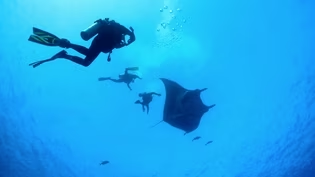
Video has Closed Captions
Preview: S9 | 3m 14s | Scientists study manta rays in Mexico’s remote Revillagigedo Archipelago. (3m 14s)
Video has Closed Captions
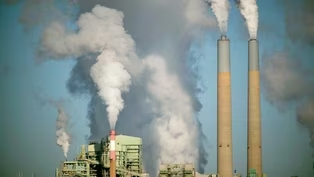
Preview: S9 | 3m 45s | Scientists study how increased levels of CO2 impact how carbon cycles through the seas. (3m 45s)
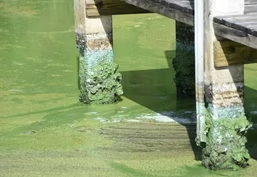
Toxic Algae: Complex Sources and Solutions - Trailer
Video has Closed Captions
Preview: S9 | 3m 2s | Experts study the cause and effects of Florida’s toxic algal blooms. (3m 2s)
 Now Playing
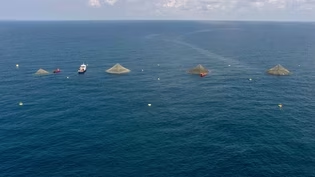
The Future of Seafood - Trailer
Video has Closed Captions
Preview: S9 | 3m 53s | Scientists work with the private sector to develop sustainable offshore aquaculture. (3m 53s)
Providing Support for PBS.org
Learn Moreabout PBS online sponsorship
- Science and Nature

Explore scientific discoveries on television's most acclaimed science documentary series.

- Science and Nature

Capturing the splendor of the natural world, from the African plains to the Antarctic ice.











Support for PBS provided by:
Changing Seas is presented by your local public television station.
Major funding for this program was provided by the Batchelor Foundation, encouraging people to preserve and protect America’s underwater resources. Additional funding was provided by Diver’s Direct/Emocean Sports, inspiring the...